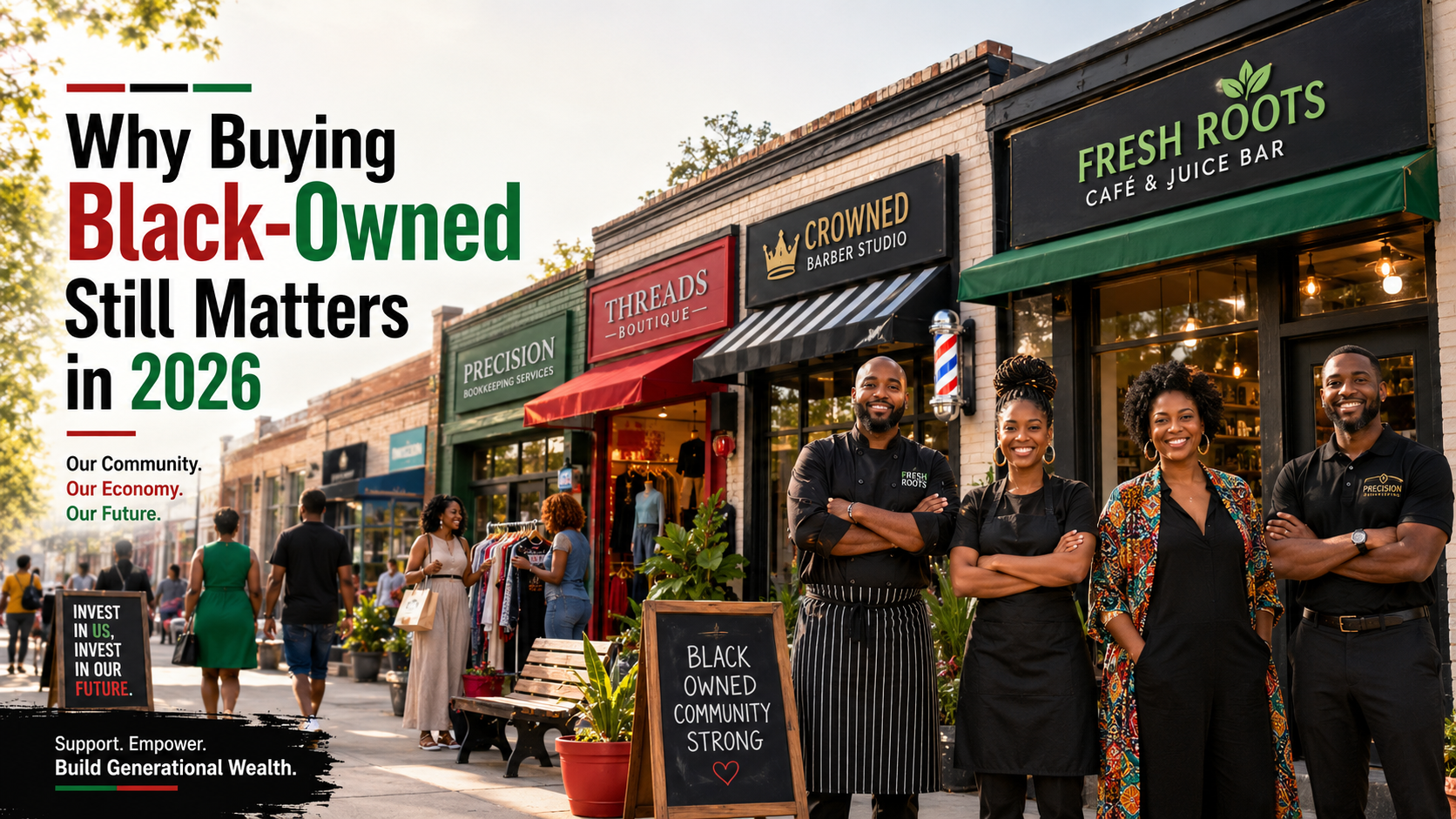
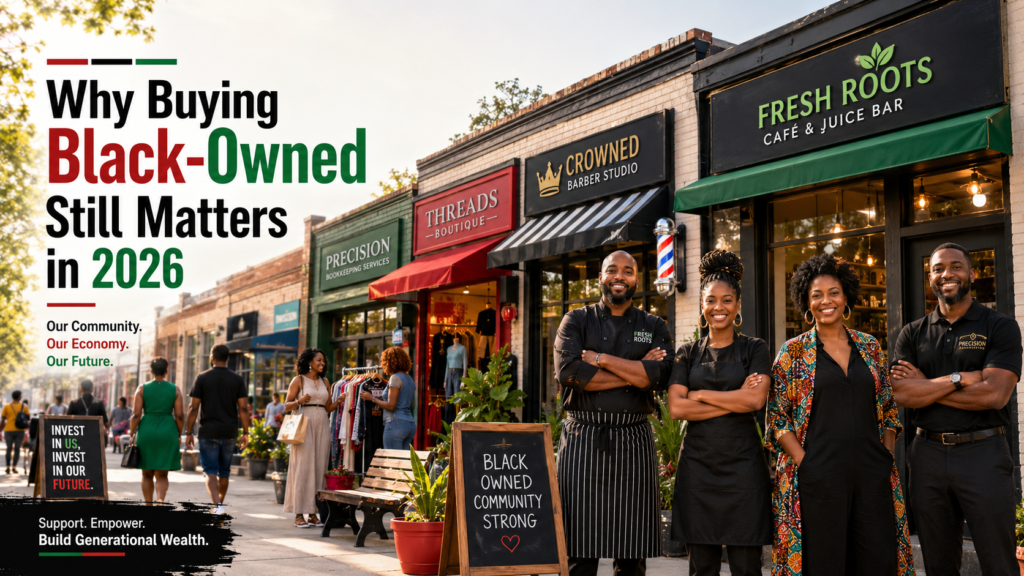
Buying Black-owned is not a trend. It is not charity. It is not something that only matters during Black History Month, Juneteenth, or when a major news story reminds people about racial inequality.
In 2026, buying Black-owned still matters because ownership still matters.
Who owns the restaurants in your neighborhood matters. Who owns the beauty supply stores matters. Who owns the clothing brands, bookstores, cleaning companies, bakeries, barbershops, salons, tech companies, home service businesses, and local food spots matters.
Ownership determines who builds wealth, who creates jobs, who gets visibility, who gets trusted by customers, and who gets the chance to pass something down to the next generation.
Black-owned businesses have always been more than places to shop. They have been community anchors. They have created opportunity when opportunity was not easily given. They have provided jobs, services, culture, leadership, and a sense of pride in neighborhoods across the country.
But even in 2026, many Black-owned businesses are still fighting for something very basic: visibility.
Black-Owned Businesses Are Growing — But the Gap Is Still Real
There is real progress happening.
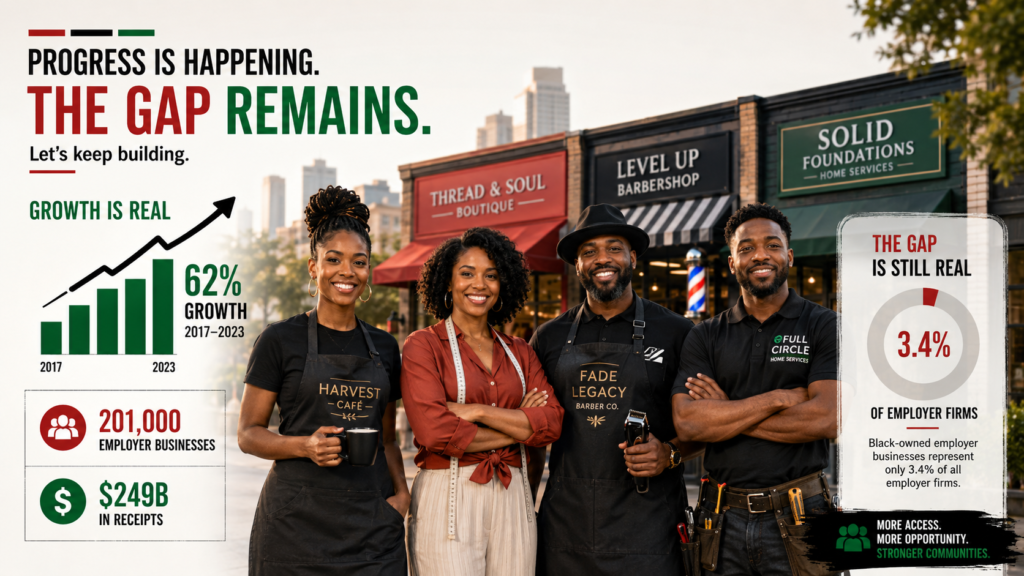
According to recent U.S. Census Bureau data, Black or African American-owned employer firms accounted for about 201,000 employer businesses in the United States, generating roughly $249 billion in receipts. Brookings also reported that Black-owned employer businesses grew by 62% between 2017 and 2023, surpassing 200,000 employer firms for the first time.
That is worth celebrating.
But the bigger picture still matters. Black-owned employer businesses represented only 3.4% of employer firms, while Black Americans make up a much larger share of the U.S. population. That gap shows why support still matters.
The issue is not talent. It is not work ethic. It is not creativity.
The issue is access.
Access to capital. Access to customers. Access to real estate. Access to marketing. Access to supplier relationships. Access to technology. Access to the same discovery channels that help other businesses grow.
When people buy Black-owned, they help close part of that access gap directly.
Every Purchase Is a Small Economic Decision
Most people think of buying something as a simple transaction.
You need food, so you buy lunch. You need your hair done, so you book an appointment. You need a gift, so you order something online. You need a plumber, a photographer, a caterer, a personal trainer, a mechanic, or a tax preparer, so you search for one.
But every purchase sends money somewhere.
That money can go to a large corporation with no real connection to your community. Or it can go to a local business owner trying to hire staff, pay rent, support a family, improve a storefront, buy better equipment, or expand into a second location.
That does not mean customers should support poor service or low-quality products. Black-owned businesses should compete, improve, and deliver value like any other business.
But customers also have power. And when customers intentionally look for Black-owned options before making everyday purchases, they help give those businesses a fair shot.
That is the point.
Not special treatment. A fair shot.
Visibility Is One of the Biggest Problems
A lot of people say they want to support Black-owned businesses, but then they run into the same problem:
They do not know where to find them.
They might know one restaurant, one nail tech, one barber, or one clothing brand. But they may not know the Black-owned businesses near them that offer catering, home cleaning, graphic design, event planning, fitness training, skincare, desserts, tutoring, photography, bookkeeping, or professional services.
Many Black-owned businesses are easy to miss because they are not always on the first page of Google. They may rely heavily on Instagram, word of mouth, pop-up events, or customers randomly sharing their page.
That is not enough.
In 2026, businesses need more than social media posts. They need searchable profiles. They need reviews. They need product listings. They need online ordering. They need booking tools. They need visibility by city, category, and location.
That is one of the reasons GoShopBlack exists: to make it easier for people to discover, support, and share businesses they may not have found otherwise.
Supporting Black-Owned Businesses Helps Local Communities
When a business grows, the impact does not stop with the owner.
A growing business can hire employees. It can pay vendors. It can rent commercial space. It can sponsor local events. It can create internships. It can mentor young entrepreneurs. It can keep money moving inside the community longer.
That is why buying Black-owned is not just about one purchase.
It is about creating more chances for businesses to survive long enough to become stable, profitable, and scalable.
One order may not change everything. But consistent support can.
Ordering lunch from a Black-owned restaurant once is nice. Ordering again, leaving a review, bringing a friend, and sharing the business with someone else is better.
Buying one product is helpful. Becoming a repeat customer is stronger.
Following a business on social media is good. Purchasing, reviewing, recommending, and referring is what actually helps the business grow.
Buying Black-Owned Does Not Mean Excluding Anyone
Supporting Black-owned businesses does not mean refusing to support other businesses.
It means being intentional about including businesses that have historically been overlooked, underfunded, and underrepresented.
There is a difference between exclusion and intentional support.
Buying Black-owned is about making sure talented entrepreneurs get seen. It is about widening the marketplace. It is about giving customers more options and giving business owners more opportunity.
Anyone can support a Black-owned business. Anyone can buy from one. Anyone can leave a review, share a link, book a service, order food, or recommend a business to a friend.
Economic support is not limited by race. It is something everyone can participate in.
What Real Support Looks Like in 2026
Real support is not just saying, “I support Black businesses.”
Real support looks like action.
It looks like searching for a Black-owned restaurant before ordering from the same national chain again.
It looks like booking a Black-owned photographer, hairstylist, cleaner, caterer, accountant, designer, or consultant.
It looks like leaving a real review after a good experience.
It looks like sharing a business with a friend who actually needs that service.
It looks like giving constructive feedback instead of silently disappearing.
It looks like understanding that small businesses may not have the same staff, budget, or systems as major corporations — while still holding them to a professional standard.
Most importantly, real support means consistency.
A business cannot survive on one viral post. It needs steady customers.
The Future of Black-Owned Business Is Digital and Local
The next phase of Black-owned business growth will not only happen in physical storefronts. It will happen online, on mobile, in search results, in marketplaces, through delivery, through booking systems, and through digital communities.
That is why discovery matters so much.
A great business should not stay hidden because the owner does not have a huge marketing budget. A local restaurant should not be invisible because it is not on every major app. A service provider should not lose customers simply because people do not know they exist.
In 2026, supporting Black-owned businesses means helping them become easier to find, easier to trust, and easier to buy from.
That is the work.
Final Thought
Buying Black-owned still matters because the wealth gap still exists. The visibility gap still exists. The funding gap still exists. The opportunity gap still exists.
But so does the talent.
Black entrepreneurs are building. They are creating. They are hiring. They are serving communities. They are launching brands, restaurants, services, and products that deserve to be seen.
The question is not whether Black-owned businesses exist.
They do.
The question is whether we will make the effort to find them, support them, review them, share them, and help them grow.
That is why buying Black-owned still matters in 2026.
And it will continue to matter until opportunity, visibility, and ownership are no longer unevenly distributed.
Start with one purchase. Then make it a habit.